A video by one of our members. Thanks to O’Veli Budak
Read the latest car news and check out newest photos, articles, and more from the Car and Driver Blog.
A video by one of our members. Thanks to O’Veli Budak
Read the latest car news and check out newest photos, articles, and more from the Car and Driver Blog.
How to say months of the year in Turkish. I always find difficult to learn the name of the months in a foreign language. Here is the list for the months in Turkish
Yılın ayları : Months of the year
Ocak,Şubat,Mart,Nisan,Mayıs,Haziran,Temmuz,Ağustos,Eylül,Ekim,Kasım,Aralık
as you can see march,may,august sounds familiar with english but others are … well you have no easy way to remember these i guess. Hope you are good in memorizing things. Try to use them frequently so you can transfer memory to permanent memory…

23rd of April is a holiday in Turkey. The holiday is about National Independence and Kids Holiday. The only Holiday on Earth dedicated to kids by our leader “ATATÜRK”.
What makes this day special is: from all over the world kids comes to Turkey, stay with Turkish families, have friends from every nations and show their national dances in the national TV.
You may check TRT1 if you have satellites.
HAPPY KIDS HOLIDAYS to everyone who still has a kid soul inside!
Since i started this blog it passed more than a year already. And i hope you have developed your Turkish more than you want to. You have learned many things esp about grammar and tenses.
For those who are following my blog i suggest you to go back and study from time to time. To make things fresh in memory. And have the habit to learn 3 words a day. Just 3 words.
For our new readers i just want to encourage them and also make old people remind some important stuff I am writing a small basic survival guide now.
Merhaba: Hello
Nasılsın : How are you?
İyiyim ya sen? : I am fine and you?
Ben de iyiyim : I am fine too
Teşekkürler : Thanks
Teşekkür Ederim : Thank you ( for pronounce say fast “Tea Sugar A Dream” :o)
Çok Teşekkür Ederim : Thank you very much
Görüşürüz : See you
Adın ne?: What is your name?
Benim adım Bond,James BOND: My name is Bond,James BOND. :)) Sıfır Sıfır Yedi (007 :o)
Tanıştığımıza memnun oldum : Pleased to meet you
Kaç Lira?: How much money?
Lütfen : Please
Hesap Lütfen: Bill Please / May I have the bill please
Güle güle : Bye
Bira : Beer <— Life saving word 🙂
Şarap : wine
Kola : Coke
Su : water
Ekmek : Bread
Bir soğuk bira lütfen : One cold beer please <— (Life saver sentence)
Hope you enjoy ordering your beer in Turkish when you visit Turkey.
Şerefe(Turkish), Cheers ,Kippis (Finnish) ,Narok (Romanian), Egészségedre(Hungarian),Skål(Swedish) and the ones that i forgot to say!
Sağlığınıza : to your Health!
Şerefe : Cheers (to the honor)
Hei,
I don’t know if everybody knows but i am a member of CouchSurfing community. What is couchsurfing? If you don’t have any idea have a look at CouchSurfing Project It is a nice way of communicating with the rest of the world by opening your home to complete strangers. Spooky ha? :))
Anyway In one of the Threads i saw there is a Turkish Certificate Program which is ONLINE! yes it is online so I just wanted to share with you. Maybe some of you may want to be get certified who knows?
Here is the url of the Anadolu University Turkish Certificate Program . >> Turkish Certificate
Güle Güle !
Hei Folks,
Ready for another lesson? Today we gonna talk about time. How to ask the time? and how to learn the time?
saat : watch:hour
Let’s see!!
Saatiniz var mı ? Do you have a watch?
Saat kaç? What is the time?
Saat bir : it is 1 o’clock
Saat oniki : it is 12 o clock.
Saat oniki yirmiüç : it 12:23
Saat biri beş geçiyor : it is 5 past 1
saat onikiyi beş geçiyor : it is5 past 12
saat bire beş var. : it is 5 minutes to 1
saat onikiye beş var : it is 5 minutes to 12
saat yarım : it is 12:30
saat oniki buçuk : it is half past 12
saat onikiyi çeyrek geçiyor : it is quarter past 12
saat onikiye çeyrek var : it is quarter to 12
The idea is simple “var” is used with “hour + e”
“geçiyor” is used with “hour+i”
Put some times and read them in the comments section!
Merhabalar,
Bu sefer bu yazıyı Türkçe yazıcağım. Umarım beni anlıyorsunuzdur. Ben Facebook’da bir grup kurdum. Linki :
Teach yourself Turkish Facebook group
Lütfen üye olun ve Türkçe konuşacak arkadaşlar bulun.
Sevgilerle,
Mert…
Hei folks,
A friend of mine wrote a hangman for Turkish. If you want to try here is the link Turkish Hangman.
I hope you enjoy and find it useful.
Mert…
Hei folks,
Thank god for making Turkish really an easy language. It has been a long time since my last post. Since that i have worked very hard, we have celebrated sacrifice holiday in Turkey. but i was so occupied with my East Europe tour. Visited Czech Republic, Poland and Hungary.
Can you believe that i was not able to say thank you in Polish? This is why i thank for Turkish. .)
Today i am gonna talk about if (eğer) clauses. To make a if clause
-eğer güzel ise ben de alacağım. (if it is nice i will buy it too)
the idea is to use -ise.
If : Eğer
yakışıklıysa or yakışıklı ise is used with subjectives
koşacaksan is used with verbs.
Eğer polonyaya gidecekseniz yanınıza euro almaya gerek yok. – If you will go to poland there is no need to take euro with you.
Eğer seviyorsan arkasından gitmelisin. – if you love her you should go after her. (I am so romantic today lol )
-Eğer geleceksen bana haber ver : <——TRANSLATE this own your own.
Geldiysen kapıyı çal<——- TRANSLATE this own your own.
Create some if clauses in the comments so i can correct them.
To all those people who are following my Turkish blog…
MERRY CHRISTMAS TO ALL OF YOU!!!
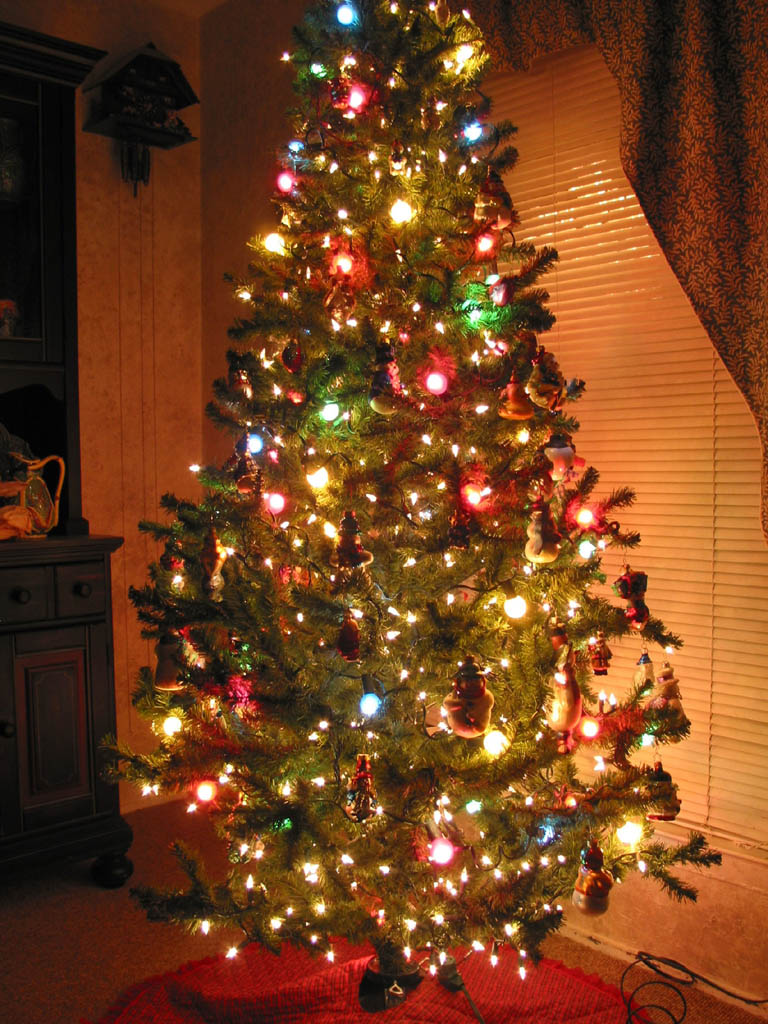
I wish all of you a merry christmas and a happy new year. (MUTLU YILLAR) I hope 2009 will be the best year you will ever had and hope you can speak Turkish this year. 🙂
With hugs and kisses.
Mert…